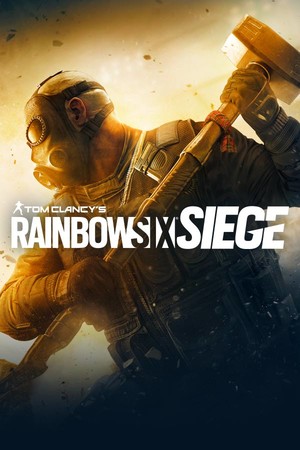
The core mechanic is destruction, and everything else is commentary. Soft walls, reinforced walls, hatches, barricades — every surface in Siege has a material property and a counter. Breach charges, sledgehammers, Maverick's torch cutting murder holes one at a time: every round is architecture criticism played at 300 actions per minute. No other shooter makes the map a participant. The building is the second team, and learning to read it — which walls matter, which floors can be shot through, where the vertical play lives — is the actual skill curve. Aim matters; literacy matters more.
The information game is what separates Siege from every tactical shooter that tried to copy it. Drones in the prep phase, bulletproof cams, sound as a user interface — KB will say it plainly: you play Siege with your ears. Footsteps on wood versus carpet, a breaching charge being placed two rooms over, the specific audio signature of every gadget: the sound design is information architecture, and players who learn to hear win rounds that aim alone can't. One-shot headshots are the economy everything trades in — every angle is a negotiation, every peek a risk calculation, because anyone can die to anything at any time. That's not randomness; that's stakes.
Operators are systems, not characters. Seventy-plus gadgets that combine: Thatcher disables electronics so Thermite can breach the reinforced wall — that's a combo, not two picks. Bandit tricking, Mira windows, Lesion mines as information: the draft phase is deck-building, and counter-picking is a skill the game teaches through pain. The honest footnote is the community's edges — the ranked grind has a toxicity tax, and the learning cliff is real. Ubisoft's answer, a decade in, was Siege X: a free engine-level upgrade with a visual overhaul, modernized onboarding, and Dual Front, the new 6v6 mode that finally gives casual players a home that isn't the ranked meat grinder.
A shooter getting engine-level investment in year ten is almost unheard of, and it tells you what the concurrents already say: 69,876 playing when we last looked, for a 2015 game. The tactical shooter has had challengers — some excellent — but none that replicate the density. Siege asks for everything: your aim, your ears, your map knowledge, your team's comms. And it pays it back with rounds that feel like heists. Concurrent counts don't lie: the walls are still standing, and people are still trying to knock them down.
The comeback arc deserves its own telling, because this game was supposed to die. Ubisoft Montreal revealed Siege at E3 2014 with a hostage-rescue demo that went viral, then launched it on December 1, 2015 into a wall of server problems and thin content — a brilliant core wrapped in a package that felt half-finished. Most live games die there. Siege did the opposite: in 2017, Ubisoft pulled the emergency brake and ran Operation Health, an entire season with no new operators, dedicated to fixing hit registration, netcode, and spawn peeking. It was the rare live-service mea culpa that actually worked. Year 2 and 3 brought the operator flood (Ela, Vigil, Dokkaebi, Zofia), the pro scene found its legs, and by 2019 the game that almost launched dead was pulling tens of millions of registered players and becoming the template every live-service shooter wished it had written. The lesson: ship the fix, not the excuse.
The esports scene is the other pillar — quieter than the battle-royale circuits, meaner per capita. The Six Invitational in Montreal every February is the Super Bowl of tactical shooters: two weeks of the world's best five-stacks playing chess at 300 APM, with the R6 Share program letting fans fund their favorite orgs through in-game skins. BLAST runs the regional leagues, the Esports World Cup brought Siege onto the biggest stage in competitive gaming, and the Siege X update even added a dedicated Esports tab in-game with championship views and global standings. This is a scene built on comms discipline and pixel-perfect executes, not highlight reels — and it's been self-sustaining for a decade.
Then came Siege X, June 10, 2025: the biggest swing in the game's history. Free-to-access for Unranked, Quick Match, and the new 6v6 mode — ranked and the full operator roster stay behind the paid game, but the door is finally open. The headline is Dual Front: six attackers' and defenders' operators on the same team, respawns, and a giant map of sectors where both squads push and defend simultaneously, with a Neutral Sector running rotating Assignments (escorting Dokkaebi to extraction, then the Keres Safe Room data-heist in Year 10 Season 3). Around it: destructible ingredients (gas pipes that explode, fire extinguishers that smoke), advanced rappel that lets you wall-sprint around building corners, five modernized maps at launch (Clubhouse, Chalet, Border, Bank, Kafe) with three more each season, a full audio overhaul tuned for tactical sound, the return of Unranked, weapon inspection, a communication wheel, veteran rewards covering Years 1 through 10, and R6 ShieldGuard — Ubisoft's upgraded anti-cheat with live updates and recoil-detection. The learning cliff got its first real staircase: new Enlisted and Field Training onboarding with 40 missions.
Year 10 kept the tempo. Operation Prep Phase brought Rauora, an attacker who can barricade doorways shut — the first time the defense's signature tool showed up on attack. Operation Daybreak remastered Clash, made electricity neutral (a slowdown debuff instead of a hard counter), and reworked limb damage. Operation High Stakes added defender Denari and modernized Consulate, Nighthaven Labs, and Lair for the Siege X lighting tech, while the weekly Siege Cup gave competitive stacks a standing Sunday appointment. Eleven years of operations, and the patch notes still read like a game that expects to be here in another five. For the most information-dense shooter ever made, the only honest review is the decade itself: played, studied, and still evolving.